Creator notes
Two languages, one moment: making a clip travel
A practical captioning exercise for English and Italian creator clips, inspired by the Sicilian setting of LA DOLCE VICE.

4 min read · 30 October 2026
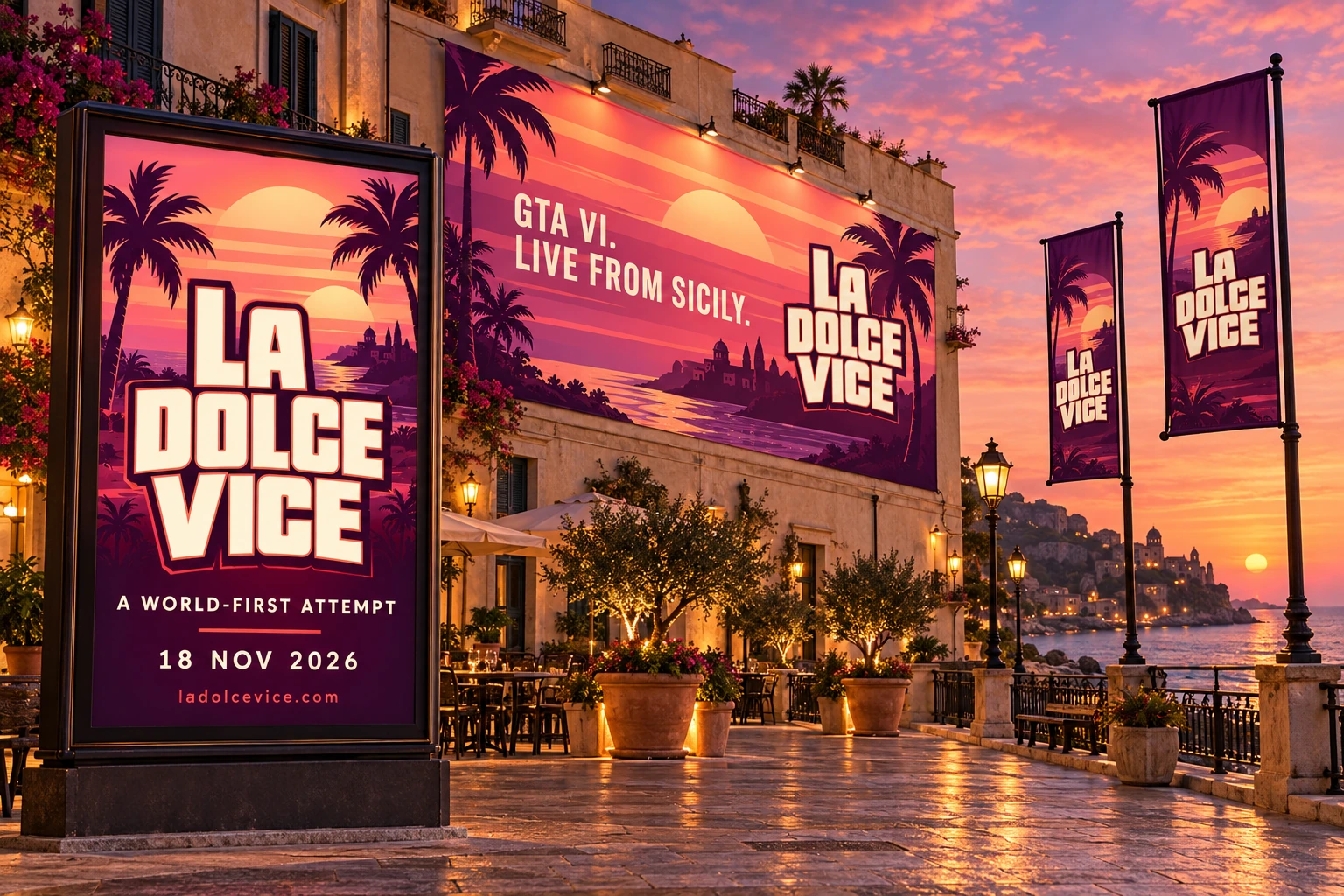
LA DOLCE VICE’s published plan puts English at the centre of Atle’s GTA 6 subathon, with Italian crossovers from his home in Sicily. That gives a short clip an interesting creative problem: how do you keep the personality of a conversation when part of the audience does not speak both languages?
A useful edit lets a newcomer understand the moment while leaving room for the speaker’s delivery. Here is a practical exercise for recorded clips. It is not an announcement of live translation, captioning services or a new broadcast segment.
Find the thought before translating it
Start by listening to the complete exchange. Identify what prompted the reaction, what the speaker means and what happens immediately afterwards. A phrase that seems mysterious in isolation may make perfect sense when the viewer can see the object being discussed.
For an imagined example, someone points at a tiny espresso cup and says, in Italian, that it should be enough for the whole night. A glance at the cup supplies the joke. An English subtitle needs to preserve the speaker’s dry confidence; an added explanation about coffee would compete with the moment.
This is a fictional editing example, not a quotation from Atle or an upcoming LA DOLCE VICE scene. Try it with a recording you own or have permission to edit, and keep enough of the setup for the reaction to make sense.
Decide what the text needs to carry
W3C’s accessibility guidance distinguishes same-language captions from translated subtitles. Captions represent speech and meaningful non-speech sound, synchronised with the audio. Translation makes the spoken content understandable in another language; it does not automatically supply all the information a viewer needs when they cannot hear.
For a bilingual clip, decide which audience each version serves. An English translation of an Italian line may need a speaker label if the person is off camera. A sound that changes the meaning of the scene may also need to be represented.
Automatic transcription can provide a starting point, but W3C advises checking its accuracy. Listen for names, language switches and small words that change the meaning. Then ask someone fluent in the translated language to check whether the wording fits the actual exchange.
Keep the reveal where it belongs
In the espresso example, putting the entire joke on screen before the speaker looks at the cup could give away the payoff. Preview the text with the picture and voice together. Let the viewer encounter the information in the order that makes the scene work.
Watch once with sound, then once muted. Can you tell who is speaking? Does the text cover the cup or the expression that carries the joke? Is there time to read the line before the next reaction? These checks give you concrete changes to make.
The Guru’s website reactions offer a related lesson: visible words keep an interaction understandable when sound is off. A recorded conversation requires its own review, especially when the meaning crosses languages.
Show the language skill in one finished sample
For a creator developing a portfolio, one carefully translated exchange can show judgement that a general claim of being bilingual cannot. Present the original, the translated version and a short note about a choice you made. Explain, for example, why you kept a pause or chose a natural expression over a literal translation.
Team Singularity’s Twisty announcement describes an interest in turning character ideas into watchable scenes. Language work is another way to help a scene reach its audience. This exercise proposes a portfolio sample, not an open commission or a promise of selection.
The Sicilian setting is part of what gives LA DOLCE VICE its personality. For the person behind the project, read Atle’s preparation story. For viewing information about the GTA 6 live stream, use the live guide.
Team Singularity’s Twisty partnership ↗
How to follow the plan
The GTA 6 live stream watch guide is the place to find current viewing information. The LA DOLCE VICE homepage brings together the event plan, countdown and social channels.
This journal will follow the preparation as it develops, including the people, decisions and creative work behind the event. More details will be shared as they are ready.
For now, save 18 November at 18:00 CET.
Sicily sets the scene.
Vice City takes over.
Sources and further reading
Atle’s published event introduction and language plan (checked 2026-10-30)
W3C: Captions/Subtitles (checked 2026-10-30)
Team Singularity partners with Twisty (checked 2026-10-30)